
Don’t Want to Share Your Phone Number? Read This First.
Creating a Gmail account sounds simple — until Google suddenly asks for your phone number.
At that moment, most users hesitate.
What happens to your number after you submit it?
Will it be used for recovery only — or connected to your broader digital identity?
And if you try to skip it the wrong way, could your account be flagged or suspended?
If you value privacy and long-term account security, you need to understand how this really works.
Many people often searched:
- create a Gmail account without phone number
- create Gmail without phone number
- create Google account without phone number
- Gmail without phone number
- Gmail creates without phone number
Here is the honest, professional answer:
Yes, it is sometimes possible — but not guaranteed.
In this expert guide, you’ll learn:
- When Google allows Gmail without a phone number
- The correct and legal method
- Why verification sometimes becomes mandatory
- What to avoid
- How to secure your account properly
Let’s go and try to learn step by step.
If you love it, then give your feedback in the comment box.
Table of Contents
1. Can You Really Create gmail without phone number?
Short answer: Yes — but only in certain situations.
Google does not make a phone number compulsory in every case. Sometimes the field is optional.
However, Google uses automated security systems. If your activity looks risky, phone verification becomes mandatory.
Google relies on a risk-based authentication model. This system evaluates multiple signals, i.e., IP reputation, device fingerprinting, browser consistency, and user behavior patterns.
For example, if an account is created on a new device from a network with a suspicious activity history, the system assigns a higher risk score.
When that risk threshold crosses a certain level, phone verification is automatically triggered.
So, the real answer is:
Possible? ✔
Guaranteed? ❌
Understanding this distinction is essential before attempting account creation without a phone number.
2. Why Google Asks for Phone Verification
Before trying to skip it, understand the purpose.
Google asks for phone numbers to:
- Prevent spam account creation
- Stop bots
- Reduce fake accounts
- Improve account recovery
- Enable two-step verification
It is mainly for security — not marketing.

In practice, Google uses automated risk detection systems and behavioral signals to determine whether additional verification — such as phone confirmation — becomes mandatory during signup.
When Google detects unusual activity, it requires verification to confirm you are a real person.
2.1 How Google’s Anti-Abuse System Actually Works
Google does not rely on a single trigger when deciding whether phone verification is required. Modern account protection systems operate using machine-learning-driven anomaly detection models.
During signup, Google evaluates:

- Account creation velocity (how many accounts are created from the same device or IP in a short time)
- Device binding signals (cookies, hardware fingerprints, browser entropy)
- Behavioral biometrics (typing cadence, mouse movement patterns, interaction timing)
- Network trust history (prior abuse reports linked to that IP range)
- Cross-account linkage risk (shared recovery emails, reused recovery signals)
Each factor contributes to a probabilistic risk model. If the predicted abuse likelihood crosses a predefined internal threshold, additional verification — such as phone confirmation — becomes mandatory.
This is why verification appears inconsistent to users. It is not random. It is adaptive.
3. Conditions Where Phone Number Is Not Required
Whether Google asks for a phone number largely depends on its internal trust evaluation system. Each signup attempt is assigned a dynamic trust score based on device history, network reputation, and behavioral consistency.
There is no official “skip trick.”
But these conditions improve your chances:
1. Use a Personal Device
Create the account on:
- Your own laptop
- Your home Wi-Fi
- A device already used for Google services
Trusted environments reduce risk flags.
Google also applies account aging signals. Devices and networks that have a long, clean interaction history with Google services gradually accumulate trust weight.
Conversely, newly observed devices or freshly provisioned IP addresses start with neutral or low trust until behavior proves legitimacy.
This explains why long-used personal devices are less likely to trigger mandatory verification.
2. Avoid VPN or Proxy
VPN often triggers security checks.
Use your real IP address.
3. Do Not Create Multiple Accounts Quickly
If you create many accounts in a day, Google may force verification.
Create only one account at a time.
4. Try During Android Setup
Sometimes when setting up a new Android phone, Google may allow account creation without immediate phone verification.
These are not hacks — just safe usage practices.
4. Step-by-Step: How to create google account without phone number
Follow this carefully.
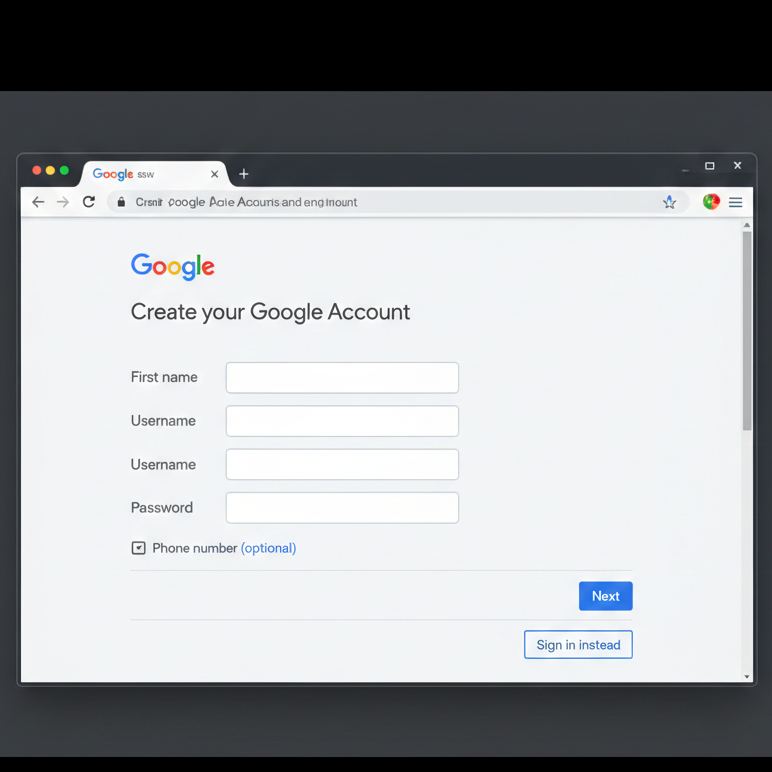
Step 1: Open the Official Google Sign-up Page
Go to:
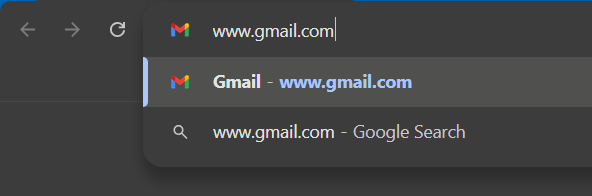
Use your normal browser — not incognito.
Step 2: Enter Basic Details
Fill:
- First name
- Last name
- Username
- Password
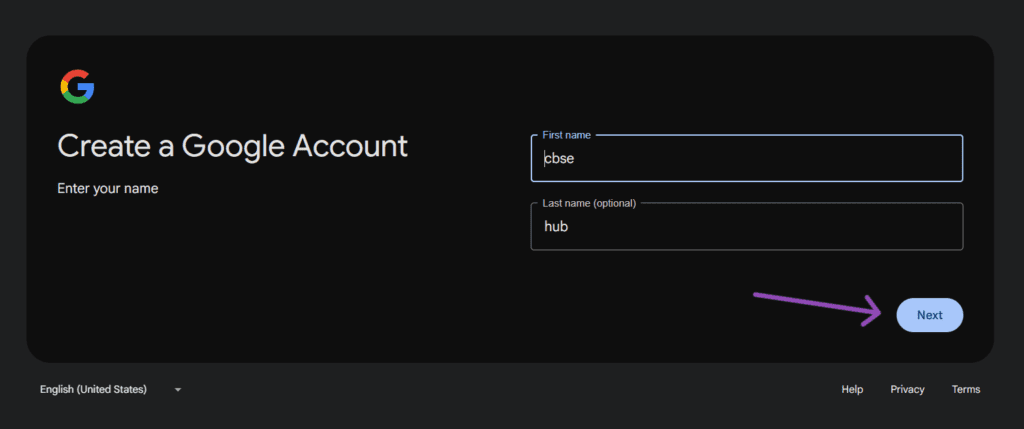
Click Next.
Step 3: Phone Number Section
If the phone number field shows as optional, leave it blank.
Click Next.
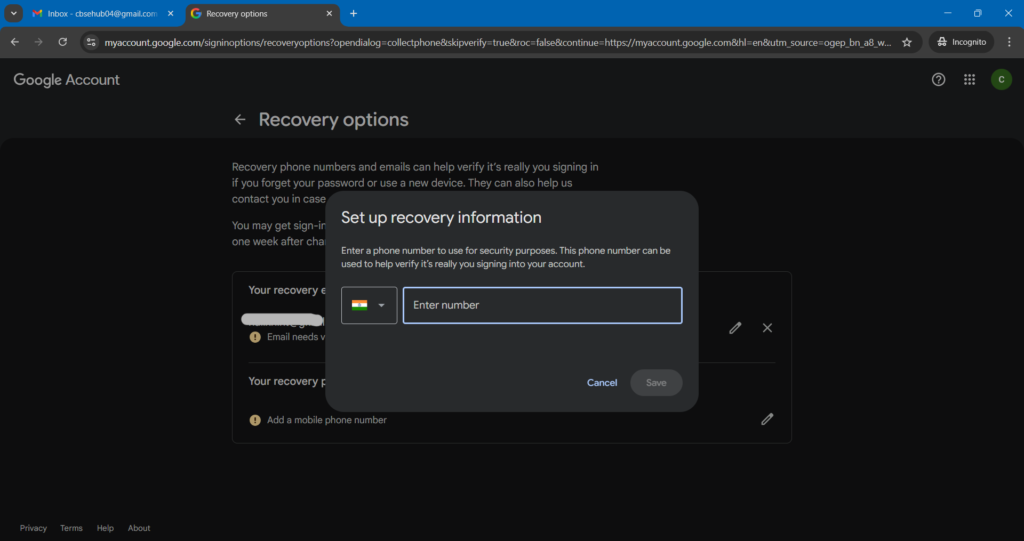
If Google allows it, you can continue without entering a number.
Step 4: Add Recovery Email
Even if skipping the phone number, always add a recovery email.
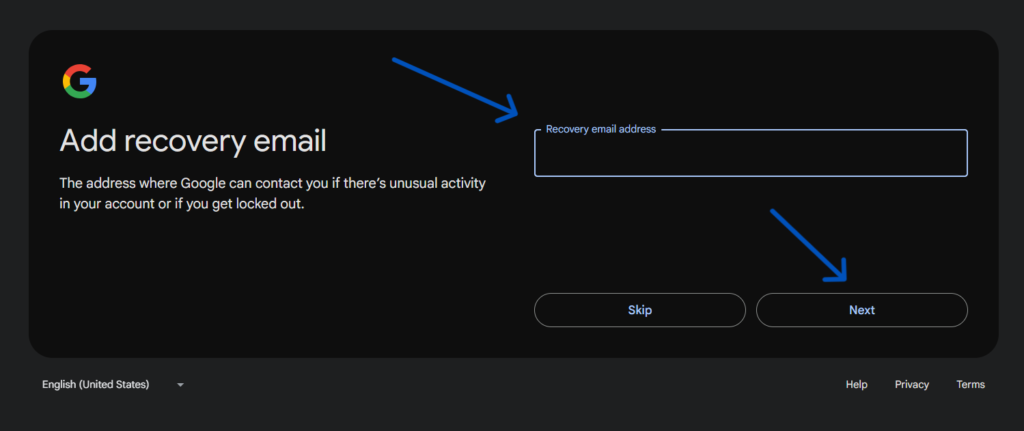
This protects your account if you forget the password.
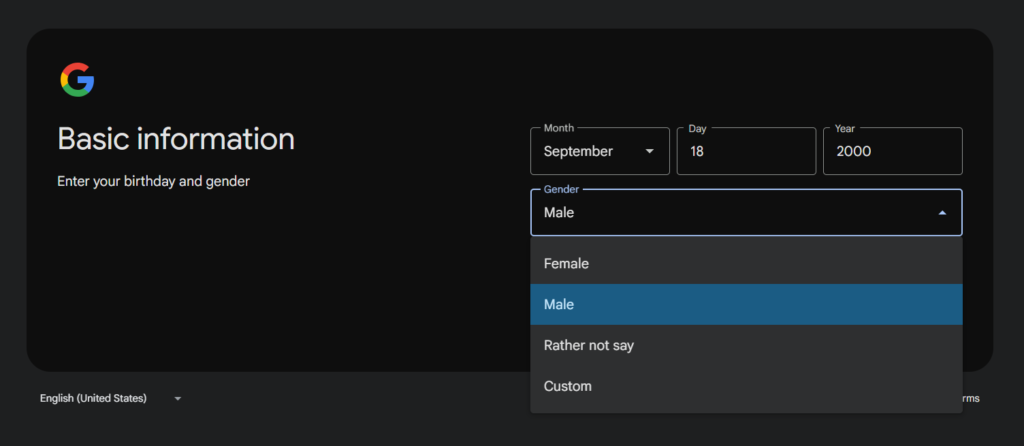
Step 5: Enter Date of Birth and Gender
Provide correct information.
Click Next.
Step 6: Accept Terms
Read and click I Agree.
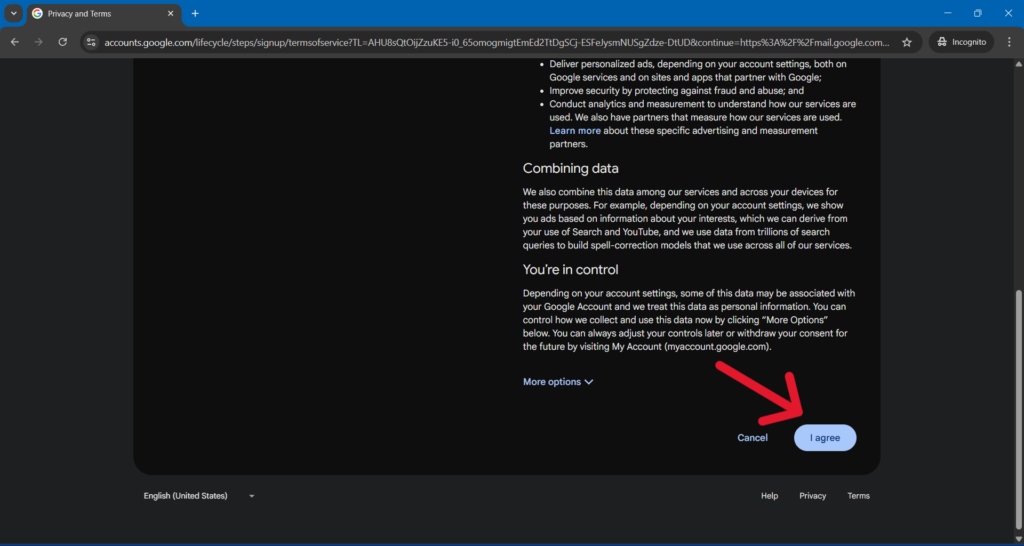
If no phone verification appears, your Gmail account is successfully created without phone number.
If verification appears, compliance is the only legitimate option.
Related Blog: Read more blogs now
5. What If Google Forces Verification?
If Google asks for an OTP:
- Do not try fake number websites
- Do not use SMS receiving tools
- Do not use automation scripts
These methods often result in:
- Account suspension
- Permanent deletion
- Security lock
If verification is required, either:
Attempting workarounds often results in permanent account restriction or suspension.
Even if an account initially passes signup without phone verification, post-creation monitoring continues. Sudden login location changes, mass email sending behavior, or automated activity patterns can retroactively trigger security challenges or temporary access limitations.
Verification decisions are lifecycle-based — not limited to the signup moment.
For long-term safety, compliance is better than shortcuts.
6. Safe Privacy Tips After Account Creation
If you created Gmail without a phone number, secure it properly.
1. Use a strong password
Combine:
- Uppercase letters
- Lowercase letters
- Numbers
- Symbols
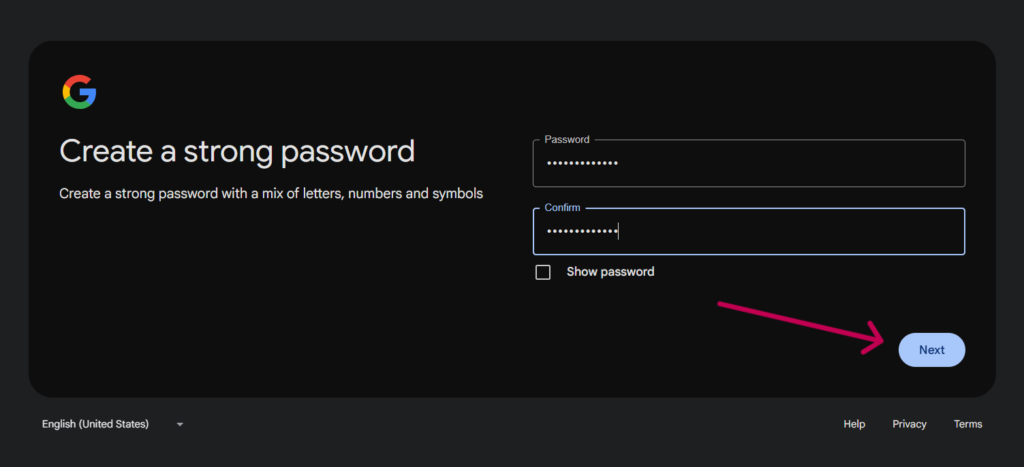
Example format:
SecureMail@2026
2. Enable App-Based 2-Step Verification
Instead of SMS, use:
Google Authenticator app
This improves security without sharing your phone number publicly.
3. Keep Recovery Email Updated
If you lose access and have no phone number linked, a recovery email becomes essential.
4. Monitor Security Activity
Visit Google Account → Security → Check recent activity regularly.
7. Dangerous Methods You Must Avoid
Many websites promise:
“100% working trick to create Gmail without a phone number.”
Be careful.
Common risky methods:
- Temporary SMS websites
- Fake virtual numbers
- Repeated VPN switching
- Buying pre-made Gmail accounts

These can cause:
- Account removal
- Identity risk
- Data loss
Professional advice: Avoid shortcuts.
7.1 How Google’s Verification Policies Evolved
Over the past decade, large-scale bot campaigns and automated account farms significantly increased abuse across major platforms. As a result, Google strengthened its signup verification models.
Compared to earlier years, modern verification logic is:
- More behaviour-driven
- Less rule-based
- Continuously adaptive
- Region-sensitive

This is why older “skip methods” no longer work consistently. The system evolves based on abuse patterns.
Understanding this evolution helps explain why phone verification appears unpredictable — it responds dynamically to global risk conditions.
8. Conclusion
A Gmail account is not simply an email address — it functions as a foundational layer of your digital identity. It connects to financial platforms, cloud storage, professional communication, and long-term data archives.
Short-term attempts to bypass verification mechanisms may create structural instability within that identity. Accounts built on risky signals are more likely to encounter recovery friction, security challenges, or trust limitations over time.
The strategic approach is not to search for loopholes, but to understand the architecture of the system. When you operate within its security framework — using trusted devices, consistent behavior, and layered authentication — you build a stable digital presence that endures.
Privacy is important. Stability is equally important. The intelligent balance between the two defines responsible digital citizenship.
Frequently Asked Questions (FAQs)
1⃣ Does Google always require a phone number for new Gmail accounts?
No. Phone verification is not universally mandatory. Google applies a risk-based authentication system that evaluates device history, IP reputation, and behavioral consistency before deciding whether additional verification is required.
2⃣ What factors increase the chances of phone verification during Gmail signup?
Phone verification is more likely if:
- The IP address has a history of spam activity
- Multiple accounts are created from the same device
- A VPN or proxy is used
- The device has no prior trusted Google activity
These signals increase the internal risk score.
3⃣ Does using a VPN automatically trigger phone verification?
Not always — but it significantly increases the probability. Many VPN IP ranges are flagged due to abuse history, which can cause Google’s automated systems to request additional verification.
4⃣ Can minors create a Gmail account without a phone number?
In some cases, yes. Age-based flows sometimes reduce verification requirements, especially when the account is created under supervised or family-linked environments. However, this varies by region and policy updates.
5⃣ Will Google ask for a phone number later, even if the signup succeeds without it?
Yes. Google may request phone verification later if:
- Suspicious login behavior is detected
- Password recovery is initiated
- Account recovery signals are weak
Verification is dynamic, not only signup-based.
6⃣ Does location affect whether phone verification is required?
Yes. Signup attempts from regions with higher abuse patterns may face stricter verification requirements. Google’s anti-abuse systems adapt to geographic risk signals.
7⃣ Is creating multiple Gmail accounts without a phone number risky?
Yes. Rapid multi-account creation increases abuse suspicion. Even if one account is approved, repeated attempts may trigger mandatory verification or account restrictions.
8⃣ Can a Gmail account without a linked phone number be fully secure?
Yes — but only if alternative security measures are implemented:
- Strong password
- App-based 2-Step Verification
- Verified recovery email
- Consistent login behavior
Security depends on layered protection, not just phone linkage.
9⃣ Are temporary SMS websites safe for Gmail verification?
No. These services are commonly abused and monitored. Accounts verified using temporary or recycled numbers are at higher risk of suspension or recovery failure.
10. What is the safest long-term strategy if privacy is a concern?
The safest strategy is:
- Attempt to sign up from a trusted device
- Avoid automation or bypass tricks
- Add a recovery email
- Use app-based authentication instead of SMS
- Operate within Google’s security framework
Long-term stability is more important than short-term avoidance.