
Table of Contents
Introduction: Why do we need the best ChatGPT prompt ideas
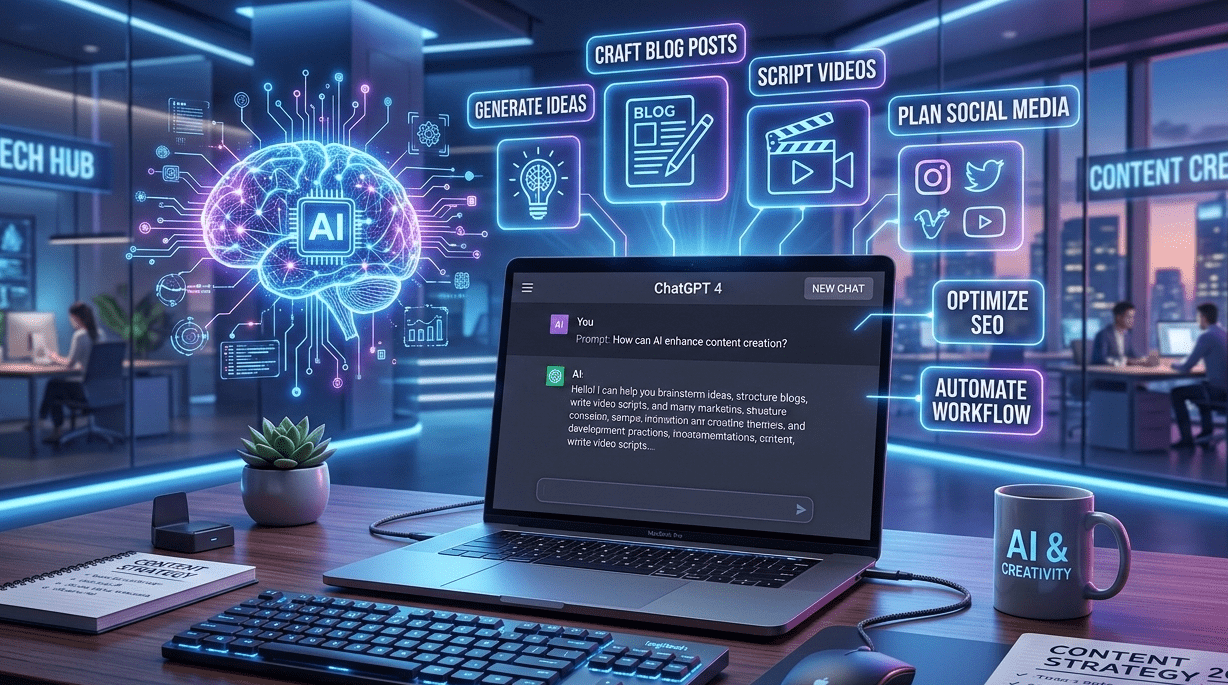
AI can generate powerful content—but the quality of its output depends almost entirely on the quality of the prompt.
Clear, well-structured prompts produce accurate, relevant, and high-impact results. Unclear instructions often result in content that is basic, general, and less useful.
A prompt is essentially a structured instruction that defines the objective, audience, tone, format, and expected outcome of the response. When these elements are clearly specified, AI can generate content that is strategic, precise, and aligned with your goals.
This guide presents 60 carefully designed ChatGPT prompts that help eliminate generic output and produce clear, purposeful, and performance-focused content.
tured breakdown of categorized prompts designed to produce clear, consistent, and high-impact content.
Who This Guide Is For
This guide is designed for individuals who want to use AI more strategically, including:
• Content creators and social media marketers
• Students and academic researchers
• Job seekers and career professionals
• Entrepreneurs and startup founders
• Freelancers and independent consultants
If you want to produce clear, structured, and high-impact content using ChatGPT, these prompts provide practical frameworks you can apply immediately.
Real-World Example: Why Prompt Precision Matters
Consider two creators using ChatGPT.
Creator A writes:
“Write an Instagram caption about fitness.”
Creator B writes:
Write a high-energy Instagram Reel script about beginner home workouts for busy college students. Start with a bold hook in the first 3 seconds, use short punchy sentences, include one myth-busting fact, and end with a call-to-action encouraging viewers to save and share.”
Which one gets better results?
The second prompt produces significantly stronger output because it clearly defines the audience, format, tone, structure, and objective.
This level of precision is what separates average AI content from high-impact, viral-ready content.
Categories of ChatGPT Prompts in This Guide
How This Guide Is Organized
To make this guide practical and easy to navigate, the 60 prompts are grouped into clear strategic categories.
Instead of scrolling through a long list, you can directly jump to the section that matches your objective.
The prompts are organized into the following areas:
• Career development and job applications
• Academic learning and study support
• Business planning and entrepreneurship
• Social media and content creation
Each section begins with a brief explanation to help you understand how and when to use the prompts effectively.
60 Best ChatGPT Prompt Ideas

Career & Job Growth ChatGPT Prompts
Visit the official website of ChatGPT: Click here
In today’s competitive global job market, standing out requires more than generic templates. Recruiters across competitive hiring markets prioritize clarity, structure, measurable results, and role alignment.
These prompts provide step-by-step guidance to craft resumes, cover letters, LinkedIn profiles, interview responses, negotiation scripts, and career plans that fully meet international hiring standards.
This section provides strategy-driven prompts to enhance your positioning for a job, career growth, or international opportunities.
All prompts in this section are adaptable to hiring standards.
Prompts for job seekers
1. Professional Resume (Country-Specific Format)
Develop a resume tailored to the hiring standards of [country].
Ensure formatting, section order, terminology, and length align with regional recruitment conventions and ATS requirements.
Include the following sections:
• Contact Information
• Professional Summary
• Key Skills
• Work Experience (achievement-focused bullet points with measurable results)
• Education
• Certifications
• Projects (if relevant)
• Technical Skills
• Optional sections such as Volunteer Work or Publications
Use concise, impact-focused language and role-specific industry keywords aligned with the [job title] position in [industry].
2. ATS-Optimized Resume
Develop an ATS-optimized resume for [insert job title] based strictly on the following job description: [paste job description].
Integrate role-specific keywords, required technical skills, industry terminology, and core competencies directly reflected in the posting. Structure the document with clearly labeled sections: Professional Summary, Core Competencies, Work Experience, Education, Certifications, and Technical Skills.
Exclude tables, columns, graphics, icons, special characters, headers/footers, or complex formatting that could interfere with applicant tracking system parsing. Emphasize quantified achievements and measurable outcomes, ensuring keywords are incorporated naturally within context.
Ensure the final resume meets modern ATS compatibility standards while remaining clear, professional, and easily scannable for human recruiters.
3. Cover Letter Tailored to Job Description
Craft a personalized cover letter for [insert job title] at [company name] using the job description: [paste job description]. Begin with an engaging introduction showing genuine interest and understanding of the company’s mission and values. In the body, link your relevant experience, skills, and achievements to the key responsibilities, using examples and measurable results. Maintain a concise and impact-focused tone that aligns with corporate hiring expectations. End with a strong closing that reinforces enthusiasm and readiness for an interview. Keep the letter concise (300–400 words), focused, and tailored to the employer.
4. LinkedIn Summary
Write a compelling LinkedIn summary for a professional working as [job title] in [industry]. Use a tone that conveys credibility and measurable impact while remaining authentic, personable, and conversational. Emphasize core expertise, value delivered, and distinctive strengths in a way that engages readers and reinforces professional positioning.
Start with a strong introduction that clearly defines your professional persona and highlights your key strengths and specialized capabilities. Include details such as years of experience, major accomplishments, measurable outcomes, technical skills, leadership abilities, and career goals.
Integrate carefully selected, role-relevant keywords and industry-specific terminology aligned with current hiring search patterns. This strengthens profile indexing within platform algorithms and increases discoverability among recruiters and talent acquisition professionals in competitive markets.
Conclude with a call-to-action inviting recruiters, collaborators, or potential connections to reach out.
Write the summary to strike a harmonious balance between professional credibility and genuine authenticity. Maintain a professional tone while showcasing individuality, and structure it to maximize profile visibility and meaningful networking opportunities.
5. LinkedIn Headline Ideas
Generate 20 distinct, keyword-optimized LinkedIn headline options for a [job title] in [industry], each within the 220-character limit.
Ensure each headline:
- Integrates high-impact, role-specific, and industry-relevant keywords.
- Highlights measurable achievements, certifications, specialized expertise, or niche competencies.
- Communicates a clear value proposition and professional positioning.
- Avoids generic or overused phrases.
Provide stylistic variation ranging from formal, corporate positioning to more personality-driven personal branding, while maintaining strategic search visibility within the target industry.
6. Cold Email for Job Referral
Compose a concise, professional cold email requesting a referral for the [job title] position at [company name].
Open with a brief introduction, referencing any mutual connections, shared alumni affiliation, or common professional background. Clearly state the specific role and provide a succinct value proposition, highlighting 2–3 relevant, results-driven accomplishments that demonstrate alignment with the position.
Request guidance or a referral courteously, making it clear that you value the recipient’s time and welcome a brief response at their convenience. Conclude with a note of appreciation and indicate that your resume is attached for their consideration.
Keep the email under 200 words and ensure the tone is formal, courteous, and appropriate for corporate communication.
7. Interview Questions (Role-Specific)
Generate 25 role-specific interview questions for [job title] in [industry], organized into the following categories: Technical Skills, Behavioral, Situational, Leadership, Teamwork, Problem-Solving, and Culture Fit.
Ensure the questions reflect current competitive hiring standards and industry expectations. Include advanced, scenario-based, and application-focused questions that assess technical depth, decision-making ability, real-world execution, and strategic thinking, enabling comprehensive preparation for high-level interviews.
8. Interview Answers (STAR Format)
Provide STAR-based sample answers for [job title]. Structure each clearly, highlight measurable results, and show leadership or problem-solving skills. Align with modern employer expectations. Focus on specific achievements, avoid vague statements, and keep responses natural, confident, and authentic.
9. Salary Negotiation Script
Create a professional salary negotiation script for [job title] in [country], using region- and industry-specific data. Start by thanking the employer, then present an evidence-based case for higher compensation, highlighting relevant skills, achievements, and value. Show flexibility by considering bonuses, benefits, or growth opportunities if salary is fixed. Provide versions for email and verbal negotiation, using a confident yet courteous professional tone.
10. Thank-You Email After Interview
Write a professional thank-you email for [job title] at [company name]. Thank the interviewer, briefly mention key discussion points, reinforce interest, and highlight one strength that aligns with the company’s goals. Maintain a tone that is courteous, authentic, and professional. Limit to 150–200 words, suitable for formal corporate environments.
11. SOP for Study Abroad
Draft a detailed and compelling Statement of Purpose for admission to [program name] at [university name] in [country]. The SOP should include academic background, relevant projects, internships, professional experiences, career goals, reasons for choosing the specific country and university, alignment with program curriculum, and long-term aspirations. Demonstrate clarity of purpose, intellectual curiosity, leadership potential, and global perspective. Avoid clichés and focus on personal growth, academic achievements, and future contributions to the field. Keep it structured, persuasive, and 800–1000 words.
12. Personal Statement for Visa
Write a clear and persuasive personal statement for a student/work visa application for [country]. Explain the purpose of the visit, academic or professional intent, financial stability, ties to the home country, and commitment to complying with visa regulations. Maintain formal tone, logical structure, and transparency. Avoid emotional exaggeration and ensure the statement addresses immigration officer concerns professionally and confidently.
13. Recommendation Letter Draft
Draft a professional letter of recommendation for [candidate name] applying for [job/program]. The letter should be written from the perspective of a [manager/professor/supervisor], highlighting character, work ethic, technical skills, leadership, achievements, and measurable contributions. Include specific examples demonstrating competence and integrity. Maintain a formal tone suitable for academic or corporate institutions in India, the US, UK, or Canada.
14. Freelance Proposal (Upwork/Fiverr)
Write a persuasive freelance proposal for a project related to [project description]. Start with a customized opening that addresses the client’s specific requirements. Highlight relevant experience, past results, technical skills, portfolio references, timeline, and value proposition. Include a clear call-to-action and reassure the client about communication and reliability. Keep it concise yet compelling and optimized for competitive freelance marketplaces targeting international clients.
15. Career Change Roadmap
Create a detailed step-by-step career transition roadmap for someone moving from [current field] to [target field]. Include skill gap analysis, required certifications, learning resources, portfolio building strategies, networking approaches, resume rebranding tips, and interview preparation guidance. Provide a 3–6-month action plan with measurable milestones. Ensure the roadmap considers current job market trends and industry demand, and includes both online and offline strategies for a successful transition.
Career Section Summary
These prompts help you position yourself strategically in the job market rather than relying on generic applications. By focusing on measurable achievements, ATS compatibility, and region-specific formatting, you significantly improve interview and selection potential.
If advancing your career is a priority, save this section for ongoing reference and repeated use.
If you want to read more such blogs, then visit our website: Click here
Prompts for students
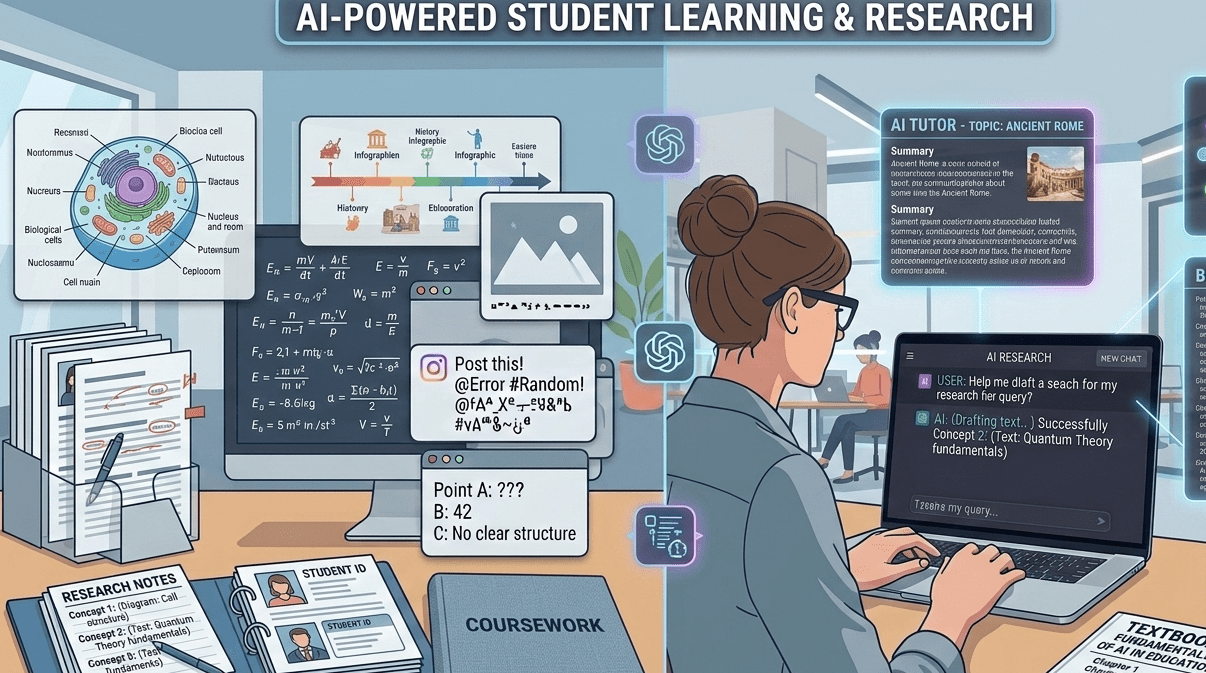
Students often struggle not because they lack intelligence, but because they lack structured academic support. These prompts transform AI into a guided academic assistant, aligning with the expectations of CBSE (India), GCSE (UK), SAT (US), IELTS, and university-level standards.
From homework explanations to research papers and scholarship essays, this section helps you study smarter and produce academically sound work with clarity and structure.
16. Homework Explanations (Class 6–12)
Explain the following homework topic in a clear, step-by-step manner suitable for a Class [insert grade 6–12] student: [insert topic]. Break the explanation into simple language first, then gradually introduce technical terms with definitions. Include examples, diagrams (described in words if needed), formulas (if applicable), real-life applications, and short practice questions with answers at the end. These prompts can be methodically customized to align with recognized academic and assessment frameworks, including the Central Board of Secondary Education (CBSE), General Certificate of Secondary Education (GCSE), the SAT, the International English Language Testing System (IELTS), as well as broader university-level academic standards and evaluation criteria. The explanation should be detailed yet easy to understand, avoiding unnecessary complexity while maintaining academic accuracy.
17. NCERT Summary (India)
Provide a detailed yet concise summary of NCERT Class [insert class] [insert subject] Chapter [insert chapter name]. Structure the summary with clear headings and subheadings covering all key concepts, definitions, formulas, diagrams (described), important examples, and case studies mentioned in the chapter. Highlight important points for board exams and include 5–10 likely exam questions (short and long answers). Adhere exclusively to the official NCERT syllabus, avoiding any extraneous or off-topic details, and present the content in clear, easy-to-understand academic English to support efficient and accurate revision.
18. GCSE Revision Notes (UK)
Create comprehensive GCSE revision notes for [subject and topic]. Structure the notes according to the UK GCSE curriculum framework. Include definitions, key concepts, formulas (if relevant), worked examples, diagrams explained in text, common exam mistakes, and practice questions with brief answers. Make the content concise yet exam-focused, highlighting keywords that are important for scoring high marks. Present the information in clear bullet points to improve readability, and structure the content so it aligns precisely with GCSE marking criteria—demonstrating accurate subject knowledge (AO1), effective application of concepts (AO2), and thoughtful analysis or evaluation where required (AO3).
19. SAT Practice Questions (US)
Generate 20 SAT-style practice questions for [Math/Reading/Writing section] following the current SAT format. Include multiple-choice options where applicable, clear instructions, and difficulty levels ranging from medium to advanced. For math, include step-by-step solutions after the questions. For reading/writing, explain correct answers with reasoning. Ensure the questions reflect the structure, tone, and logical reasoning skills tested in the US SAT examination system.
20. IELTS Speaking Answers
Generate Band 8–9 level sample answers for IELTS Speaking Part [1/2/3] on the topic: [insert topic]. Structure the responses so they read naturally and professionally, using clear language, coherent sequencing of ideas, and a logical progression that enhances credibility and understanding.
Use precise, elevated vocabulary where appropriate, incorporate idiomatic expressions naturally, vary sentence patterns for sophistication, and maintain strong clarity and cohesion throughout. Include one extended cue card answer (for Part 2) and follow-up analytical answers (for Part 3). Avoid memorized tone; make answers sound authentic and conversational while demonstrating lexical resource, grammatical range, and pronunciation guidance tips.
21. Assignment Outline
Create a structured academic assignment outline for the topic: [insert topic]. Include Title, Introduction (with thesis statement), Literature Review (if applicable), Main Body sections with subtopics and supporting arguments, Case Studies or Examples, Counterarguments, Conclusion, and References (APA/MLA/Harvard style as specified). Ensure logical flow, academic tone, and critical analysis. The outline should be detailed enough to serve as a blueprint for writing a high-quality university-level assignment.
22. Essay Draft
Write a comprehensive academic essay of approximately [word count] words on the topic: [insert topic]. Start with a well-structured opening paragraph that establishes relevant background context and clearly presents a focused thesis statement outlining the main argument or purpose. Develop well-structured body paragraphs with arguments supported by examples, data, and critical analysis. Include counterarguments where relevant and conclude with a concise summary and final insight. Maintain a formal academic tone suitable for high school or undergraduate level as specified. Follow citation style if required.
23. Research Paper Structure
Provide a detailed structure for a research paper on the topic: [insert research topic]. Include Title, Abstract (150–250 words), Introduction (problem statement and objectives), Literature Review, Methodology (research design, data collection, analysis methods), Results, Discussion, Conclusion, Limitations, and References (APA/MLA/Chicago format). Explain what should be included in each section and provide sample content for clarity. Ensure the structure follows peer-reviewed academic research conventions.
24. Presentation Script
Create a detailed presentation script for a [5–10 minute] academic presentation on the topic: [insert topic]. Structure the presentation content on a slide-by-slide basis, clearly outlining each slide title, key bullet points for display, and a complete speaker script for delivery. Ensure the material follows a logical sequence, communicates ideas clearly, and incorporates engagement elements such as thought-provoking questions, real-world examples, or brief case references.
Craft a compelling introduction and a strong concluding message to reinforce impact. Modify the vocabulary, level of detail, and overall tone to suit the specific audience, keeping it simple and clear for school students, more analytical for undergraduates, and strategic and insight-driven for MBA-level learners. Additionally, provide recommendations for supporting visuals, including relevant charts, graphs, images, or diagrams to enhance understanding and audience retention.
25. Debate Speech
Write a structured debate speech either supporting or opposing the motion: “[insert debate topic].” Begin with a strong hook, define key terms, present 3–4 logical arguments supported by examples or data, address possible counterarguments, and conclude with a persuasive closing statement. Maintain a confident tone and use rhetorical devices such as repetition, rhetorical questions, and persuasive transitions. Ensure the speech is suitable for school, college, or international debate competitions.
26. Science Project Ideas
Generate 10 innovative and practical science project ideas suitable for Class [insert grade] aligned with CBSE (India), GCSE (UK), or US curriculum standards. For each idea, provide a project title, objective, hypothesis, required materials, procedure steps, expected outcome, and real-life application. Ensure projects are safe, feasible, and demonstrate clear scientific principles. Include both simple and advanced options.
27. MBA Case Study Analysis
Provide a detailed MBA-level case study analysis of the following business scenario: [insert case details]. Structure the analysis with Executive Summary, Problem Identification, SWOT Analysis, Financial or Market Considerations, Strategic Alternatives, Risk Assessment, and Final Recommendation. Apply relevant management frameworks such as Porter’s Five Forces, PESTLE, or Value Chain where applicable. Ensure critical thinking, data interpretation, and practical recommendations suitable for global MBA programs.
28. Coding Assignment Help
Explain and solve the following coding assignment: [insert problem statement]. Provide a step-by-step explanation of logic, algorithm design, time and space complexity analysis, and clean, well-commented code in [insert language: Python/Java/C++/JavaScript]. Include test cases and output examples. Make the explanation simple and easy to understand when written for school students, but include deeper analysis, advanced concepts, and relevant optimization strategies when preparing it for university-level learners. Maintain clarity and correctness.
29. Scholarship Essay
Write a compelling scholarship essay of [word count] words for the scholarship: [insert name]. Highlight academic achievements, leadership experience, community involvement, career goals, financial need (if applicable), and alignment with scholarship values. Adopt a narrative style that shares meaningful personal experiences, using clear and specific examples to highlight perseverance, measurable impact, and the value you aim to contribute in the future. Maintain an inspirational yet authentic tone suitable for international scholarship committees.
30. Study Timetable
Create a structured and realistic study timetable for a student preparing for [exam name: CBSE Boards/GCSE/SAT/IELTS/University exams]. Include daily and weekly breakdowns, subject prioritization based on difficulty, revision slots, practice tests, breaks, and productivity techniques such as the Pomodoro method. Maintain a healthy distribution of time across academics, adequate rest, and extracurricular involvement to support both performance and overall well-being. Provide a 4-week or 8-week structured plan with measurable milestones.
Academic Section Summary
These prompts are structured to support academic excellence, exam preparation, and structured learning. These prompts maintain conceptual clarity while adhering to curriculum requirements, helping students generate academically rigorous and standards-compliant work.
Use this section whenever you need a structured academic output.
If you are like the ChatGPT blog and want to learn ChatGPT in daily life, then: Click here
Business & Startup ChatGPT Prompts
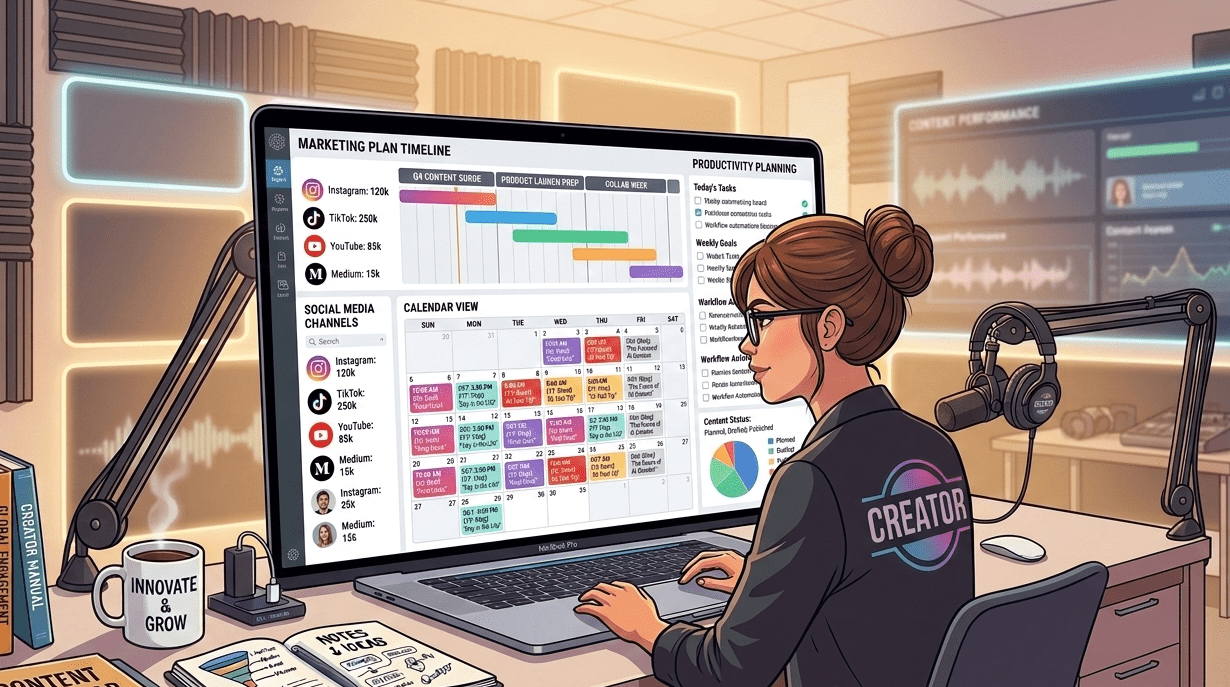
Launching or scaling a business requires structured thinking, data-backed planning, and strategic positioning. From building a startup and preparing investor presentations to analyzing competitors and writing business proposals, maintaining clarity is essential to establishing credibility.
These prompts help you approach business decisions with a professional structure aligned with investor-ready and compliance-aware business conventions.
31. Business Plan
Create a comprehensive and investor-ready business plan for a company operating in the [industry] sector, targeting the [country] market. Structure the plan with the following sections: Executive Summary, Company Overview, Problem Statement, Solution Description, Market Opportunity (TAM, SAM, SOM), Target Audience Segmentation, Competitive Landscape, Unique Value Proposition, Revenue Model, Pricing Strategy, Go-to-Market Strategy, Marketing & Sales Plan, Operations Plan, Technology or Production Process (if applicable), Legal & Regulatory Considerations, Financial Projections (3–5 years including revenue, expenses, break-even analysis, and cash flow), Risk Analysis, and Exit Strategy. Ensure the tone is professional, data-driven, and persuasive for investors, banks, or strategic partners. Include realistic assumptions and measurable KPIs aligned with the selected market.
32. Startup Pitch Deck Content
Develop detailed, slide-by-slide material for a startup pitch deck designed specifically for a business in the [industry] field, targeting the [country or global] market. Ensure each slide clearly presents key elements such as the problem, solution, market opportunity, business model, traction, competition, financial projections, and funding requirements with accuracy and strategic clarity.
Include Slide Titles and full speaking notes for each slide: Problem, Solution, Product Demo Overview, Market Opportunity, Traction & Metrics, Business Model, Competitive Advantage, Technology/Innovation, Go-To-Market Strategy, Roadmap, Financial Projections, Team Introduction, Funding Ask (amount and usage), and Closing Vision.
Ensure the messaging is concise yet compelling, investor-focused, and highlights scalability, defensibility, and revenue potential. Ensure the tone reflects venture capital evaluation criteria.
33. Elevator Pitch
Write a powerful 30–60 second elevator pitch for a business operating in [industry]. Clearly explain the problem, the innovative solution, target customers, and unique competitive advantage in simple and persuasive language. Focus on clarity, differentiation, and measurable impact. The pitch should be suitable for investor meetings and professional networking events. Ensure it is confident, concise, and memorable.
34. Market Research Summary
Prepare a professional market research summary for the [industry/product/service] sector in the [country] market. Include industry size, growth rate (CAGR), key trends, customer demographics, purchasing behavior, regulatory environment, technological influences, and emerging opportunities. Deliver a comprehensive analysis of the competitive environment, identify key factors driving market demand, evaluate potential challenges and risk variables, and present evidence-based forecasts outlining expected future growth trends. Present data-backed insights in a concise, analytical format suitable for investor review or internal strategy.
35. SWOT Analysis
Prepare a comprehensive SWOT assessment for a company within the [industry] sector. Organize the evaluation into four clearly defined sections: Strengths, Weaknesses, Opportunities, and Threats. Under each category, present 4–6 thoroughly explained points, outlining not only the factors themselves but also their strategic impact on the organization’s performance and competitive positioning.
Ensure the analysis reflects current market realities, incorporating relevant economic conditions, regulatory developments, technological shifts, and competitive dynamics. Distinguish clearly between internal elements-such as operational capabilities, financial resources, brand equity, workforce expertise, and technological infrastructure-and external influences, including industry competition, policy frameworks, consumer behavior trends, and macroeconomic factors.
Conclude with actionable strategic recommendations derived directly from the SWOT insights, demonstrating how the company can leverage strengths, address weaknesses, capitalize on opportunities, and mitigate potential threats.
36. Competitor Comparison
Create a structured competitor comparison analysis between [Company A], [Company B], and [Your Company/Product] in the [industry] sector. Conduct a structured comparison that evaluates pricing models, core product capabilities, user experience quality, technological infrastructure, distribution strategy, brand positioning, competitive advantages, operational limitations, and relative market share to ensure a comprehensive and precise competitive analysis. Present the comparison in a detailed analytical format, optionally including a comparison table. Conclude with a clear explanation of competitive advantage and positioning strategy for the defined target market.
37. Product Description
Write a compelling and detailed product description for [product/service name] targeting [specific customer segment]. Clearly explain features, benefits, use cases, technical specifications (if applicable), and unique selling points. Center the analysis on specific customer challenges, clearly identifying their unmet needs and frustrations, and explain precisely how the product addresses those issues through its features, benefits, and overall value proposition. Use persuasive yet clear language suitable for e-commerce platforms, company websites, or Amazon listings. Optimize the content with SEO-friendly keywords relevant to the target country.
38. Sales Copy
Create persuasive, conversion-focused sales copy for [product/service] specifically tailored to resonate with [audience type], clearly addressing their needs, pain points, and desired outcomes to drive action. Structure the copy using proven frameworks such as AIDA (Attention, Interest, Desire, Action) or PAS (Problem, Agitation, Solution). Highlight emotional triggers, social proof, benefits over features, urgency elements, guarantees, and a strong call-to-action. Tailor the tone to match the target market (professional for B2B, conversational for B2C). Ensure the copy is persuasive, benefit-driven, and conversion-focused.
39. Cold Email for Clients
Write a personalized and persuasive cold email targeting potential clients in the [industry] sector. Begin with a customised hook that demonstrates research on the recipient’s company. Clearly explain the problem your product/service solves, include one measurable result or case study example, and present a concise value proposition. End with a clear call-to-action, such as scheduling a short call. Write formally and courteously, keeping the message under 200 words, and ensure it aligns with globally accepted business communication practices.
40. Invoice Template
Design a structured and professionally styled invoice template tailored to meet the needs of freelancers or small enterprises based in [country], ensuring it reflects local business standards and operational requirements. Ensure the layout complies with local invoicing regulations and standard billing conventions, while presenting all charges, tax details, and payment terms in a clear, accurate, and business-appropriate manner that reflects credibility and professionalism.
Include business name, logo placeholder, contact details, invoice number, invoice date, due date, client details, itemized list of services/products with quantity, rate, subtotal, taxes (if applicable), total amount, payment terms, accepted payment methods, and bank details. Ensure formatting clarity and compliance with standard invoicing practices in India, the US, UK, or Canada. Provide a clean and easy-to-customize structure.
41. Business Proposal
Draft a formal business proposal for offering [product/service] to [client/company name]. Structure it with Executive Summary, Client Problem Statement, Proposed Solution, Scope of Work, Deliverables, Timeline, Pricing Structure, Case Studies or Proof of Work, Team Expertise, and Terms & Conditions. Ensure the proposal clearly communicates value, ROI, and competitive advantage. Maintain a persuasive and professional tone aligned with formal corporate communication conventions.
42. Website Landing Page Content
Create conversion-optimized website landing page content for [product/service]. Structure it with Hero Section (headline, subheadline, CTA), Problem Statement, Solution Overview, Key Benefits (bullet points), Features Section, Testimonials or Social Proof, Pricing Overview, FAQ Section, and Strong Final Call-to-Action. Apply compelling and convincing wording, incorporate search-friendly keywords aligned with the target country’s market, and emphasize clear value-driven benefits that resonate with the intended audience. Ensure clarity, engagement, and high conversion potential.
43. Company Profile
Write a professional company profile for a business operating in [industry]. Include Company Overview, History/Background, Mission & Vision, Core Services or Products, Market Positioning, Achievements, Certifications, Leadership Team, and Future Goals. Maintain corporate tone suitable for investors, corporate clients, or the website “About Us” section. Highlight credibility, experience, and competitive strengths in the competitive market landscape.
44. Mission & Vision Statement
Craft a compelling mission and vision statement for a company in the [industry] sector. The mission statement must distinctly outline the organization’s core purpose, identify the audience it serves, and explain the unique value it delivers. The vision statement should describe long-term aspirations, impact goals, and growth ambition. Keep both concise, inspirational, and aligned with long-term strategic objectives. Ensure clarity, authenticity, and strategic alignment.
45. Partnership Proposal Email
Write a professional partnership proposal email addressed to [company/organization name]. Clearly introduce your company, explain the mutual benefits of collaboration, outline potential partnership models (e.g., co-marketing, distribution, technology integration, strategic alliance), and suggest next steps, such as a meeting or call. Use a respectful and well-considered tone, keep the message concise and easy to understand, and clearly emphasize the advantages and collaborative gains for both parties. Ensure it aligns with professional business communication norms in cross-market collaboration.
Business Section Summary
These prompts help transform ideas into actionable plans. They are designed for founders, entrepreneurs, consultants, and corporate professionals who require investor-ready and strategy-driven output.
Return to this section whenever you are building or refining a business strategy.
Social Media & Content Creation Prompts
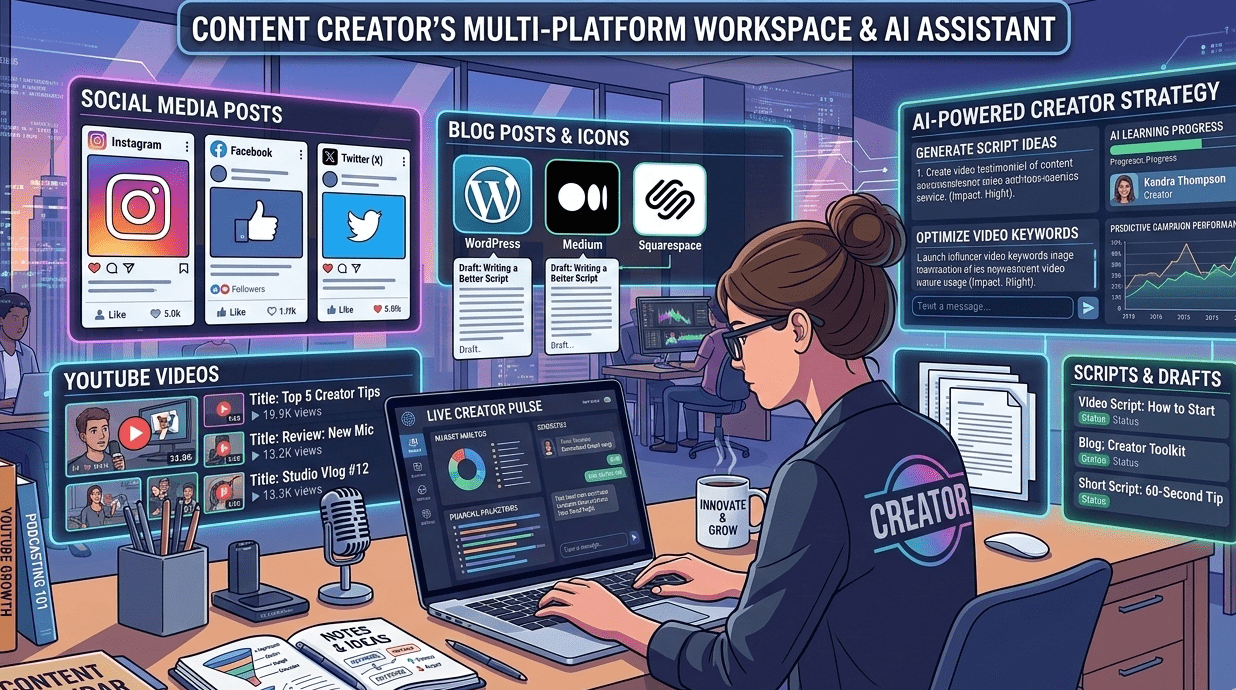
Viral content is rarely accidental. It is structured with psychological hooks, audience alignment, and platform-specific formatting. Whether you create for Instagram, YouTube, Pinterest, podcasts, or blogs, the right prompt determines engagement levels.
These prompts are designed specifically for algorithm performance, retention, clarity, and audience interaction.
46. Instagram Captions
Generate 30 high-engagement Instagram captions for a brand/creator in the niche of [insert niche]. The captions should vary in tone (educational, motivational, storytelling, promotional, humorous) and include strong hooks in the first line to increase engagement. Incorporate emotional triggers, storytelling elements, and subtle calls-to-action such as encouraging comments, shares, or saves. Include relevant emoji usage where appropriate and integrate SEO-friendly keywords naturally for discoverability. Provide short-form and medium-length variations suitable for both static posts and carousel posts. Ensure the captions align with audience psychology and current Instagram engagement trends.
47. YouTube Video Script
Write a detailed, high-retention YouTube video script for a video titled “[insert title]” in the niche of [insert niche]. Structure the script with a powerful hook in the first 15 seconds, a clear introduction, segmented main content with pattern interrupts, storytelling elements, examples, and audience engagement prompts. Include verbal transitions between sections and a compelling closing CTA encouraging likes, comments, and subscriptions. The script should be optimized for watch time, clarity, and algorithm performance. Provide timestamps for each section and suggestions for visuals or B-roll content. Make sure the tone is tailored to resonate with the specific audience profile within the defined niche.
48. Blog Post Outline
Create a detailed SEO-focused blog post outline for the topic “[insert topic].” Include an engaging introduction hook, H2 and H3 structured headings, key discussion points under each section, FAQs based on search intent, and a compelling conclusion. Incorporate primary and secondary keywords naturally within the headings. Ensure logical content flow, reader engagement strategy, and optimization for Google search ranking. The outline must be comprehensive and structured so it can be easily expanded into a full 1,500–2,500-word article aimed at English-speaking readers within the target market.
49. SEO-Optimized Blog Article
Write a comprehensive, SEO-optimized blog article of [insert word count] words on the topic “[insert topic].” Begin with a compelling introduction addressing the reader’s pain points. Structure the article using keyword-rich H2 and H3 headings, short paragraphs, bullet points where appropriate, data-backed insights, examples, and FAQs. Naturally integrate primary and LSI keywords without keyword stuffing. Include internal linking suggestions and a strong CTA at the end. Maintain readability, authority, and trustworthiness following E-E-A-T principles. Ensure it ranks well for audiences searching in competitive English-language search markets.
50. Pinterest Description
Generate 10 SEO-optimized Pinterest pin descriptions for content related to “[insert topic or niche].”
Each description should include searchable keywords, a compelling hook, benefit-driven messaging, and a call-to-action encouraging saves or clicks.
Keep descriptions concise yet informative (100–250 characters where appropriate). Ensure the tone aligns with Pinterest discovery behavior and encourages long-term traffic generation.
51. TikTok Video Idea Generator
Act as an experienced short-form content strategist who specializes in viral TikTok growth.
Generate 20 highly creative TikTok video ideas for a creator operating in the [insert niche] niche and targeting [insert target audience, e.g., students, entrepreneurs, beginners, tech enthusiasts].
For each video idea, provide the following structured elements:
- Viral Hook – A powerful opening line designed to capture attention within the first 3 seconds.
- Video Concept – A short explanation of what happens in the video and how the idea is executed.
- Engagement Trigger – The psychological driver behind the idea (curiosity, humor, controversy, storytelling, relatability, surprise, education, etc.).
- Content Format – Example: storytelling, quick tips, myth vs fact, before/after, list format, challenge, reaction, tutorial.
- Audience Interaction Strategy – A tactic that encourages comments, shares, or saves (question prompts, controversial statements, call-to-action, etc.).
Ensure the ideas:
- are optimized for short-form attention spans (15–60 seconds)
- include scroll-stopping hooks
- align with current TikTok content patterns
- maximize watch-time retention and shareability
- avoid generic ideas and focus on unique, viral-friendly concepts
Present the output as a clear numbered list of 20 ideas.
52. Podcast Episode Outline
Act as an experienced podcast producer and content strategist. Create a comprehensive and professionally structured podcast episode outline for the topic “[insert topic]”.
Design the outline so that it maximises listener engagement, clarity of storytelling, and audience retention from the beginning to the end of the session.
Include the following elements in a clear, logical structure:
- Episode Title
Create a compelling and curiosity-driven title that accurately reflects the topic and attracts potential listeners. - Opening Hook (First 15–30 Seconds)
Write a powerful opening line or short narrative that immediately captures attention and encourages listeners to continue the episode. - Episode Introduction
Provide a short introduction that explains the topic, why it matters to the audience, and what listeners will gain from the episode. - Main Discussion Segments
Break the episode into 3–5 well-organized segments, each with a clear heading and key talking points. Ensure the flow is logical and progressively builds understanding of the topic. - Storytelling Element
Include a relevant example, case study, or short story that illustrates the topic and makes the discussion more relatable and memorable. - Audience Engagement Questions
Provide thoughtful questions the host can ask listeners to encourage reflection, interaction, or social media discussion. - Key Takeaways
Summarize the most important insights or lessons from the episode in concise bullet points. - Closing Segment
Write a clear and engaging closing summary that reinforces the episode’s value. - Call-to-Action
Include a strong closing call-to-action encouraging listeners to subscribe, follow the podcast, leave a review, and share the episode.
Ensure the tone is engaging, conversational, and professional. Structure the outline to support a well-paced podcast episode with an estimated duration of 20–40 minutes, including clear segment transitions and discussion points that sustain audience interest throughout the episode.
53. Twitter / X Thread

Generate a high-value Twitter (X) thread that explains “[insert topic]” in a clear, engaging, and shareable way. The thread should contain 8–12 tweets, beginning with a compelling hook that captures attention within seconds by highlighting a surprising insight, a strong benefit, or a curiosity-driven statement that motivates readers to continue reading.
Each tweet should focus on one specific idea, insight, or actionable tip, written in concise, easy-to-understand language that fits within typical Twitter character limits. Maintain a logical progression throughout the thread, so it reads like a short guide or step-by-step explanation rather than disconnected thoughts.
Where useful, include numbered points, mini frameworks, quick examples, or relevant data points to improve clarity, credibility, and readability. The tone should be insightful, authoritative, and engaging, designed to encourage readers to learn something valuable while also keeping the content highly skimmable and easy to follow on social media.
Conclude the thread with a strong summary tweet that reinforces the key takeaway and includes a clear call-to-action, encouraging readers to like, repost, follow, save the thread, or reply with their thoughts, making the thread optimized for engagement, reach, and shareability.
54. Content Calendar
Create a 30-day social media content calendar for a creator or brand in the niche of [insert niche]. Include daily post ideas, suggested formats (reels, carousels, stories, videos), engagement goals, and strategic posting themes. Ensure a balanced mix of educational, entertaining, promotional, and community-building content.
55. Viral Hook Generator
Act as an expert social media strategist and viral content copywriter specializing in short-form video platforms.
Generate 50 highly engaging viral hooks designed to capture attention within the first 3 seconds of a short-form video.
Target Platforms:
• Instagram Reels
• TikTok
• YouTube Shorts
Niche: [insert niche]
Hook Requirements:
• Each hook must be concise (8–15 words).
• Designed to stop scrolling and create immediate curiosity.
• Use psychological engagement triggers such as curiosity gaps, surprising facts, bold claims, relatable problems, controversial statements, or unexpected insights.
• Hooks should feel natural for spoken delivery at the beginning of a video.
• Avoid generic phrases or repetitive wording.
Content Style Mix:
Include a mix of the following hook styles:
• Curiosity-driven hooks
• Shocking or surprising statements
• Relatable problem statements
• Myth-busting hooks
• “Nobody tells you this” style hooks
• Quick value-driven hooks
• Story-based hooks
• Contrarian opinions
Formatting Instructions:
• Number each hook from 1–50
• Write each hook as a single clear sentence
• Do not include explanations or extra text
Goal:
Create hooks that immediately grab attention, trigger curiosity, and encourage viewers to continue watching the video.
56. Newsletter Content
Write a compelling email newsletter for subscribers interested in “[insert topic].” Include a strong subject line, engaging introduction, valuable insights, actionable tips, and a clear call-to-action encouraging readers to click, reply, or share.
57. Video Title Generator
Generate 30 high-CTR video titles for YouTube videos related to “[insert topic].” Titles should incorporate curiosity triggers, emotional appeal, and SEO-friendly keywords while remaining clear and credible.
58. Content Repurposing Plan
Create a strategy to repurpose a single piece of long-form content (such as a blog or YouTube video) into multiple formats, including Instagram posts, short-form videos, Twitter threads, Pinterest pins, and newsletters. Outline how each format should be adapted to suit the platform.
59. Audience Persona Builder
Develop a detailed audience persona for a brand operating in the niche of “[insert niche].” Include demographic data, motivations, interests, pain points, preferred content platforms, and typical engagement behavior. Use this information to guide future content creation strategies.
60. Viral Content Strategy
Create a complete viral content strategy for a creator or brand in the niche of “[insert niche].” Include content themes, posting frequency, engagement tactics, trend monitoring strategies, and growth metrics. Provide clear steps for building consistent reach and audience growth over the next 90 days.
Frequently Asked Questions (FAQs)
1. What is a ChatGPT prompt?
A ChatGPT prompt is a clear and structured instruction that directs the AI to generate specific content. It defines the format, tone, audience, and objective, helping the system produce more relevant and accurate results.
2. Why are detailed prompts more effective?
Detailed prompts minimize ambiguity and provide clear guidance to the AI. When instructions are precise, the output becomes more accurate, structured, and aligned with the intended purpose.
3. How do prompts improve the content creation process?
Well-designed prompts streamline the creation of blog posts, scripts, marketing copy, captions, and other content formats by providing clear direction, which saves time and improves overall quality.
4. What elements should a high-quality prompt include?
A strong prompt typically includes the topic, content format, target audience, tone or style, and the intended outcome. Including these details helps the AI generate focused and useful responses.
5. Can prompts influence SEO performance?
Yes. Structured prompts can help generate SEO-optimized content by encouraging the inclusion of keywords, clear headings, structured sections, and informative answers that align with search intent.
6. Are prompts useful for beginners in content creation?
Absolutely. Prompts provide a clear framework that helps beginners structure their thoughts, develop organized ideas, and create high-quality content without requiring extensive writing expertise.
7. How can prompts help maintain consistency in content?
By specifying tone, structure, and style within the prompt, creators can maintain a consistent voice and format across blogs, social media posts, and marketing materials.
8. What is the biggest mistake people make when writing prompts?
The most common mistake is using vague instructions. Basic prompts typically generate broad, surface-level responses, whereas clear, goal-focused prompts guide the AI to produce more meaningful, precise, and high-value content.
Conclusion: Using These Prompts with Strategic Precision

The gap between generic AI output and truly high-impact content is rarely about the tool itself—it is about the precision of the instructions given to it. Clear, structured prompts act as a blueprint that guides the model toward a defined objective, improving the relevance, depth, and overall quality of the results.
When prompts specify the purpose, audience, format, and expected outcome, AI becomes significantly more effective. Instead of producing broad or surface-level responses, it delivers focused, actionable, and context-aware content that aligns with real goals.
The 60 prompts included in this guide are designed to function as practical frameworks that help you use ChatGPT more strategically. Applied correctly, they can support a wide range of objectives, including:
- Career advancement through resumes, interviews, and professional communication
- Academic performance through structured learning, assignments, and exam preparation
- Business development through planning, analysis, and strategy building
- Content creation through platform-optimized and audience-focused material
Rather than treating these prompts as fixed templates, use them as adaptable structures. Refine the details, adjust the context, and tailor the instructions to match your specific goals. The more precise your direction, the more valuable the output becomes.
Ultimately, mastering prompts is a practical skill. When used consistently and strategically, it allows you to transform AI from a simple content generator into a powerful partner for productivity, problem-solving, and high-quality content creation.