Introduction: From Constitutional Monarchy to the Rise of Napoleon
The entrance of the French Revolution into a critical and complicated phase came with the attempt of France to change from an absolute monarchy to a constitutional system. The Constitution of 1791 was supposed to curb the power of the king and to bring about a representative government, but it only exposed the wide gaps within the society and the rise of political clubs like the Jacobins and Girondins, indicating that the road to real stability was still very long. It was at this time that the French Revolution took a decisive turn, where on one side were the political dreams and on the other, the unyielding realities.
If you have not read The French Revolution part 1 and Part 2, then click here

The monarchy was then demolished, and a republic was proclaimed in France, which resulted in the trial and execution of Louis XVI, the king. This dramatic change further roused the internal conflict and foreign threats, pushing the revolution into the bloodiest phase—the Reign of Terror. By the time of Maximilian Robespierre, revolutionary courts and the guillotine were the tools used to get rid of the enemies of the revolution, and it is still being debated whether such radical actions were permissible during the French Revolution.
After Robespierre’s downfall, the Directory was established, but its rule was characterized by scandal, economic crisis, and lack of public support, which eventually led to its weakening. Napoleon Bonaparte’s ascendance was the result of such tumultuous times, as he was able to come to power by the coup of 1799. With Napoleon as the First Consul, the French Revolution was officially brought to an end, but not before it had deposited the stormy legacy of political transformation and the arrival of modern gove
Table of Contents
France Becomes a Constitutional Monarchy
The French Revolution saw the gradual swapping of an absolute monarchy with a new political system known as a constitutional monarchy in France. This change meant the king would no longer hold the power to rule without limits. His power would be defined, however, by a written constitution and through elected representatives. This transformation was an incisive and inseparable stage of the revolution where people attempted to harmonise the monarchy with democratic principles.
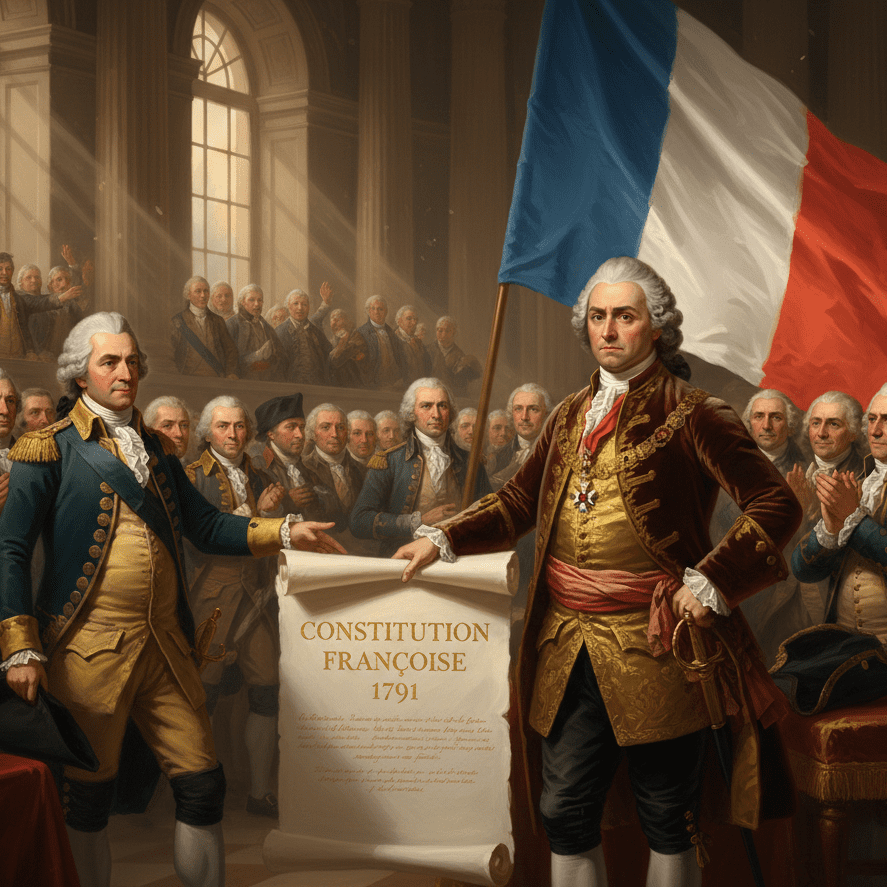
Constitution of 1791
One of the most significant impacts of the French Revolution was the Constitution of 1791. It marked the first time France ever had a written constitution and sought to establish a constitutional monarchy. This was not only the first written constitution of France but also an embodiment of the new political system that the revolutionaries desired: a constitutional monarchy.
Under the 1791 constitution, power was shared among different organs of government, rather than being solely vested in the king. The law-making power was assigned to the National Assembly, and the citizens elected its members. The king could not exert any power without being controlled by the constitution; he existed, but the constitution governed him. This paper formally declared that sovereignty was no longer the king’s alone but had been transferred to the nation. As such, it was a gigantic step taken towards democracy during the French Revolution.
Limitation of King’s Power
The limitation of the king’s power was one of the most significant objectives of the French Revolution, and the Constitution of 1791 accomplished it. King Louis XVI was no longer able to issue laws unilaterally. He was now a constitutional monarch and had to cooperate with the National Assembly.
The king was allotted only minimal powers, such as that of suspension veto, which empowered him to defer the enforcement of laws but not to finally reject them. He could not dictate either the tax or the military matters by himself. However, these restrictions kept the king from being an absolute ruler again, and thus the government remained more accountable to the people.
Political Clubs (Jacobins and Girondins)
The French Revolution was characterized by numerous political clubs that were instrumental in forming public opinion. At the heart of the matter were clubs, a milieu of people who talked about politics and projected the future of France. The most significant and prominent among these clubs were the Jacobins and Girondins.
The Jacobins leaned toward the extreme and wanted bold actions to secure the revolution. They were with the people in demanding equal rights, and later on, they became supporters of the abolition of the monarchy. The Girondins, on the contrary, were leaning towards the middle ground and were advocating for a constitutional monarchy and slow transformation. The influence of these clubs extended to laws, protests, and decisions in this period of the French Revolution.
Active vs Passive Citizens
The idea of active and passive citizens was introduced by the Constitution of 1791 during the French Revolution. The active citizens were males above a certain age who were paying a certain amount of taxes. It was only they who connected with the voting right and the political decision-making.
In contrast, the passive citizens included the poorer men and all women. They were granted basic rights like protection by law, but were denied voting rights. This system revealed that there was still a limit to equality after the great changes. A large number of people were not happy, and this disparity later on brought the revolution to the more radical phases.
Conclusion
The period of time when France transitioned to a constitutional monarchy was a significant turning point in The French Revolution. The Constitution of 1791 curtailed the king’s powers, created legislatures through elections, and aimed to establish a just government. Nevertheless, restriction on suffrage and political strife indicated that the revolution was far from over and thus, contributed to the emergence of further radical transformations.
Abolition of Monarchy and Birth of the Republic
The revolution in France during the period of 1789-1799 was a monumental event that not only changed the political landscape of the country but also marked the transition from a constitutional monarchy to a republic. The growing distrust of King Louis XVI, foreign threats, and uprisings within the country all contributed to the argument that monarchy could no longer be the protector of the nation. This period was a turning point in French history and it also marked the complete downfall of the royal house.
Trial and Execution of King Louis XVI
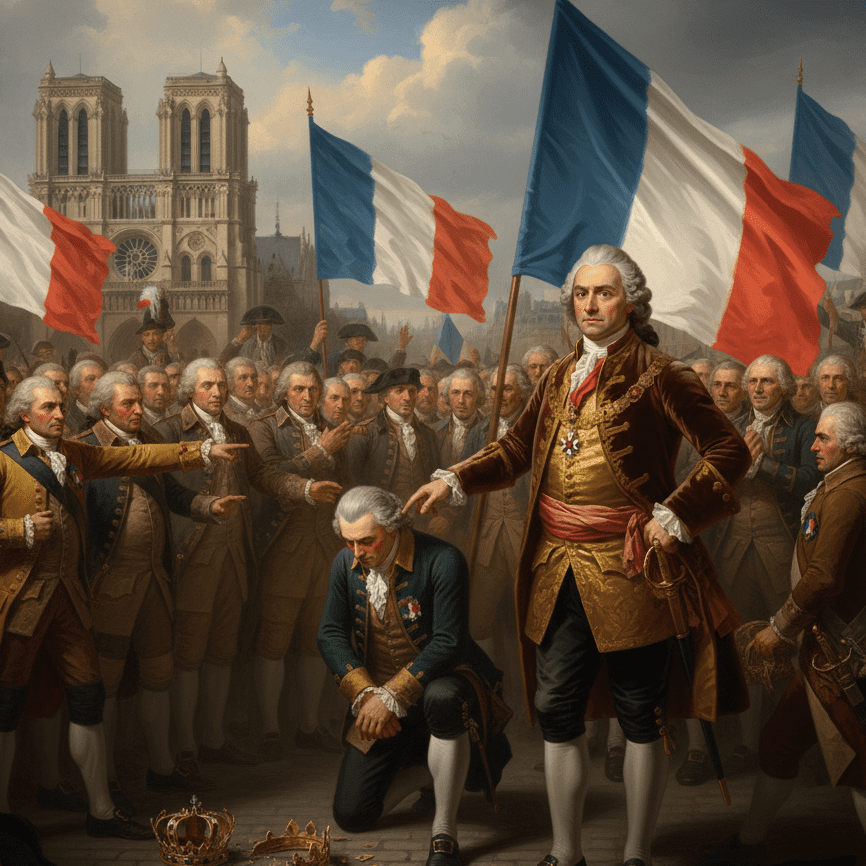
The trial of King Louis XVI was one of the most sensational happenings during The French Revolution. The king was charged with treason for his actions which were considered scheming with foreigners and counter-revolutionary. The National Convention gave the king a trial and treated him as a citizen instead of a monarch.
After a series of lengthy discussions, the Convention came to the conclusion that Louis XVI was guilty. In January 1793, the king was executed by the guillotine in a public square. This an execution sent shockwaves across Europe and it was one of clear signals that France has now fully turned its back on the monarchy. It also helped in consolidating the revolutionary forces but created panic and pushed the tensions in the country up.
End of Monarchy
King execution was a signal for the formal end of the monarchy during the French Revolution. The theological-political claim that the king could only rule by divine right was contested and lost forever. Not only that, all royal figures were removed from the public scene, titles attached to kings were taken off the political canvas.
With monarchy gone, the power was no longer in a single person’s hands but instead, it was claimed by the people through their elected representatives. This move, although the future was still unclear, revealed that France was on the path of freedom and people’s rule.
Establishment of the Republic
In September 1792, the French Revolution proclaimed France as a republic. Being a republic meant that the king’s power would be transferred to the people, who would elect their representatives. The National Convention was the new ruling body in place and pledged liberty, equality, and justice to every citizen.
The new government was a gripping and challenging episode of the revolution, plus the wars the new government was fighting with the foreign states and the resistance in France made their situation even worse. Yet this eventuality was the beginning of the era when the people’s rights were respected, and democratic ideas started to spread.
Political Instability
The political instability was a severe hindrance during the French Revolution, especially during this period. The various factions in the government were at great loggerheads over the very nature of the republic and argued about the approach to the republican government. Moderates clashed with radicals, and the resulting tension and violence escalated.
Alienated groups and political factions compounded the government’s difficulty in addressing economic crises, food shortages, and cutting off foreign armies. Strained to their limits, the governing authorities were forced to take drastic actions in the coming years. Finally, this very period of instability gave birth to the Reign of Terror and power transitions.
Conclusion
In the course of the French Revolution, the end of the monarchy and the rise of the republic were significant events. The death of Louis XVI, the end of the monarchy, and the establishment of the democratic republic were all changes that marked the new era in France. Though this period technically promised freedom and equality, political instability demonstrated the difficulty of converting revolutionary ideas into stable governance.
The Reign of Terror
The Reign of Terror was one of the principal periods during the French Revolution characterized by violence and fear. The revolution’s government used very oppressive methods to secure the republic for a period of 1793 to 1794. France was under the threat of foreign armies as well as uprisings within the country, which made the leaders think that strong measures were the only way to protect the revolution.
Rise of Robespierre
Robespierre, who was a major player in the Jacobins, was the most influential revolutionary leader in the fearsome times of the French Revolution. He and his fellow revolutionaries were convinced that the only effective measure against the counter-revolutionary forces was to take very drastic actions. Virtue, equality, and loyalty to the revolution were the main ideas around which they revolved.
As Robespierre’s power grew, he argued in favour of very severe penalties for those who were deemed enemies of the state. His ascension corresponded with the turning point towards radical policies in which fear was effectively used as a means to preserve both order and unity within the nation.
Revolutionary Tribunal
The Tribunal was established amidst the tumult of the French Revolution to administer justice to those accused of being revolutionary enemies. Quickness and often no fair trials were the characteristics of those courts. Many were bewildered or very judgemental.
The Tribunal caused the imprisonment or execution of thousands of people. Punishment was meted out to the nobles, clergy, political rivals, and even common people. This mode of operation not only increased the level of fear in society but also curtailed freedom, as anybody could be charged at any moment.
Use of Guillotine
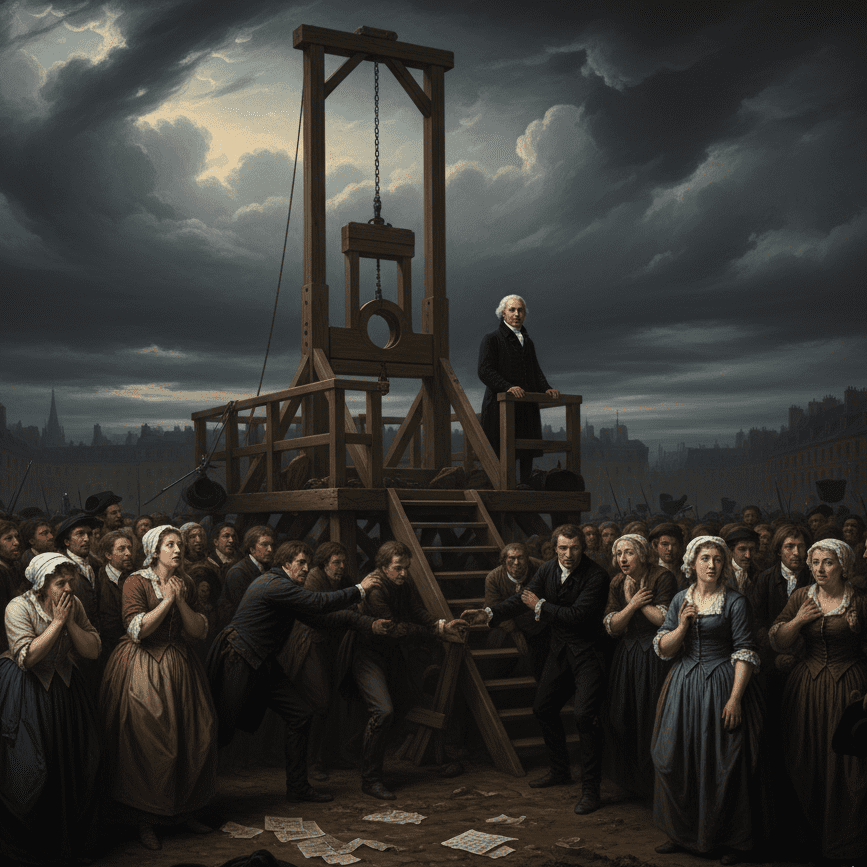
The guillotine was one of the most powerful and, at the same time, terrifying symbols of the French Revolution during the Reign of Terror. It was considered a fast and fair means of execution, applied to all the people of all classes, from the former nobility to ordinary citizens.
One of the purposes of public executions was to warn others against opposing the government; however, the execution by guillotine was so frequent that it contributed to the atmosphere of terror and suffering throughout France, thereby making the revolution violent.
Was the Reign of Terror Justified?
The question of whether the Reign of Terror was justified or not is still a subject of debate among historians of the French Revolution. The proponents of the Terror thought that severe measures were the only way to protect the new government from its enemies and to keep the monarchy from returning. They were of the view that terror was the saviour of the revolution.
On the contrary, the critics argue that the Reign of Terror was too extreme and radically contrary to the very principles of liberty and equality. There were unjustified killings, and fear replaced justice. Ultimately, the violence turned more and more people against Robespierre, which eventually led to his arrest and execution.
Conclusion
The Reign of Terror was a horrible period of the French Revolution. Though it was intended to protect the republic, the result was extensive fear and loss of lives. This period presents the dark side of revolutionary ideology that may be easily lost when power is not controlled.
The Directory and Its Failure
The French Revolution witnessed the end of the Reign of Terror, and the public was tired of the violence and demanded peace, stability, and order. A new government system known as the Directory was proposed in 1795 as a way to meet the people’s demands. Its goal was to prevent the return of monarchy; at the same time, it was to avoid the bloodshed of the Terror. Nonetheless, this government soon encountered various difficulties.
Formation of the Directory
The Directory was established by the Constitution of 1795 during the French Revolution. The new government consisted of a group of five Directors who each had a share in the executive power. The law-making power was bestowed upon two councils, so that no single group could become too powerful.
This system was meant to bring about balance and stability. Nevertheless, the government relied heavily on the military for its survival. Right from the start, the Directory was not able to win over the public and was, therefore, unable to rule effectively.
Corruption and Inefficiency
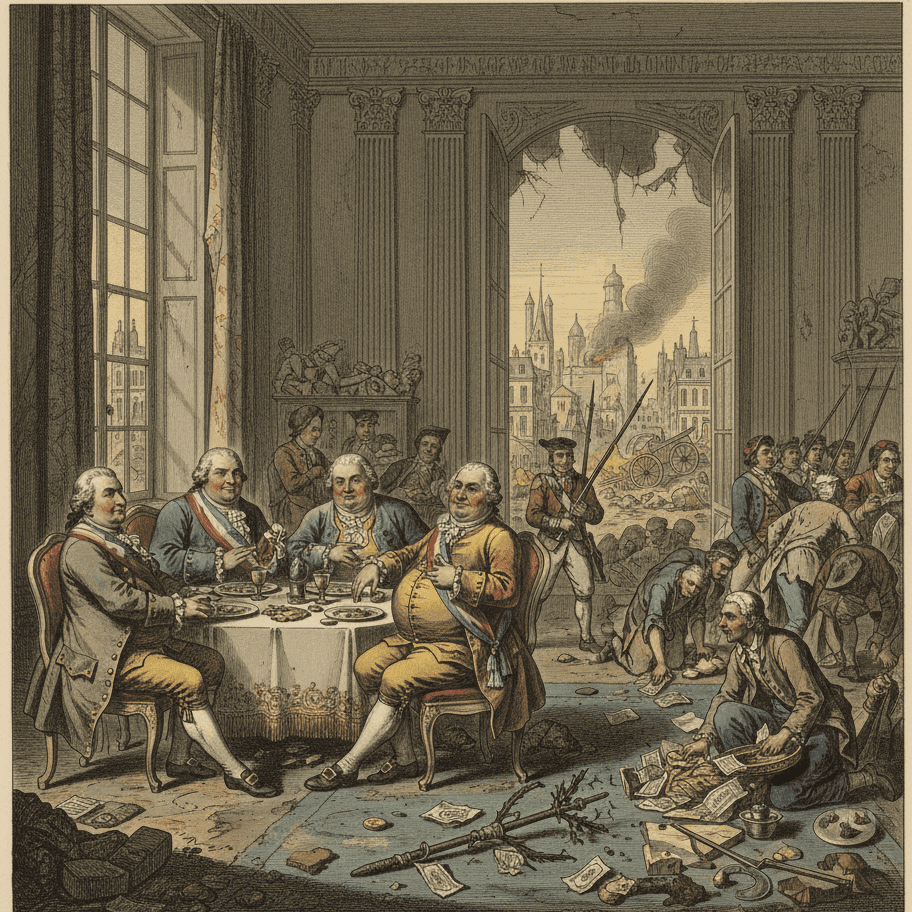
Corruption emerged as the biggest problem under the Directory during the French Revolution. The majority of the officials were corrupt and made use of their positions for personal benefits. The practices of bribery and dishonesty became widespread, and as a result, the people’s confidence in the government decreased.
Also, the Directory was very slow in making decisions. The disagreements between the Directors made reforms take longer than necessary. This, in turn, gave the government an image of weakness and incapacity to address the nation’s issues.
Economic Problems
The French Revolution under the Directory was a period characterized by serious economic problems in the country. The daily lives of people were affected by rampant inflation, scarcity of food, and high prices. The poor were the most affected, while the rich often gained from corrupt practices.
The government was unable to curtail price hikes and unemployment. With the situation deteriorating further, the people’s anger and discontent with the Directory soon became manifest.
Loss of Public Support
Corruption, economic problems, and poor leadership caused the Directory to lose public support during the French Revolution. The citizens no longer had faith in the government that it would be able to safeguard their interests or bring about improvements in living standards.
The Directory was able to stay in power for the most part because of the military backing it received. This fragile situation enabled a powerful general, Napoleon Bonaparte, to increase his power. The downfall of the Directory eventually resulted in its removal in 1799, which in turn concluded this period of the French Revolution.
Conclusion
The Directory was meant to secure stability in the wake of years of disorder, but it was unable to do so because of corruption, economic difficulties, and lack of public trust. Its failure indicated the need for strong leadership in France, and thus the stage was set for Napoleon’s ascent.
The Napoleonic Chronicles
Napoleon Bonaparte’s rise to power was the last phase of the French Revolution. On the heels of years of political instability, weak governments, and economic problems France required a strong leader. And so, Napoleon was the man to rule, bringing with him promises of order, stability, and national pride.
Napoleon’s History
Napoleon Bonaparte was a Corsican born in 1769. He was raised in a poor family and afterwards became a soldier when quite young. His training at military schools not only solidified his skills in strategy but also shaped his character as a leader.
Napoleon took the side of the revolutionary government during the French Revolution. His fidelity to the revolution was the main reason for his swift rise in the army. He made himself popular by protecting the revolutionary government against its adversaries.
Napoleon’s fame started to spread after he had won several battles in Italy. The people were so enamoured with him that he got the status of a national hero. His popularity, together with the army’s backing, was enough for him to make a move into politics.
Coup of 1799
The Directory was the government that ruled France during the Revolution; it was already moribund and highly disliked by the population in 1799. The citizens’ trust in the government had evaporated mainly due to the corruption, economic, and leadership crises. France desperately needed a powerful ruler to bring back order.
Napoleon was quick to take advantage of the situation. He executed a military coup popularly known as the Coup of 18 Brumaire in November 1799. Supported by the military, he easily overturned the Directory and met no resistance at all.
The coup completed the removal of the Directory and handed the reins of power to Napoleon. The event was a significant turning point, and it demonstrated that military strength had become more dominant than revolutionary ideals.
End of the French Revolution
The year 1799 is an event that is sometimes looked upon as the final act of the French Revolution. Revolutionary governance, which had been the last resort after ten years of fighting, bloodshed, and a political roller coaster ride, finally ended. France was no longer under the influence of the revolution.
To be sure, some of the revolution’s main ideas survived, such as the principle of equality before the law, but the overall political climate was not free at all. One strong leader centralized all power and this was interpreted to mean stability had been prioritized over democracy.
The end of the French Revolution brought about a new era in French history. Napoleon’s reign was characterized by a strong government and a stable environment instead of revolutionary turmoil.
Napoleon as First Consul
Post coup, Napoleon appeared as the First Consul of France. This title practically gave him the whole government to control. The authority in practice was with Napoleon, even if the term republic was still applied to France.
Napoleon, as First Consul, was the one who imposed new laws. The change in administration, the repairing of the tax system, and the restoration of law and order were ways he had paved the way to the public’s hearts.
The rise of Napoleon was a clear indication of the fall of the French Revolution and the emergence of a powerful ruler. He did retain some of the revolutionary principles; however, his rule was the beginning of a new political system that was characterized by strong leadership.

If you have not read The French Revolution part 1 and Part 2, then click here